Introduction: Recovery Built for Comfort, Safety, and Predictability
Choosing DIEP flap breast reconstruction is a decision for results that are natural, warm, and permanent. Your recovery should feel equally well planned. At Kent Hospital in Warwick, RI, The DIEP Group uses Enhanced Recovery After Surgery (ERAS) pathways, meticulous microsurgical monitoring, and clear at-home instructions so you can heal with confidence—whether you’re having immediate DIEP at mastectomy or converting from implants months or years later.
Good news: DIEP flaps are covered by insurance at any time—at the time of mastectomy or years afterward. You do not need implant problems to switch; many patients choose DIEP to avoid future implant exchanges and the risk of silicone leakage.
We serve Providence, Warwick, Cranston, Pawtucket, East Providence, Woonsocket, Newport and Southern Massachusetts including Fall River, New Bedford, and Cape Cod.
Visit our Before and After DIEP Flap Gallery
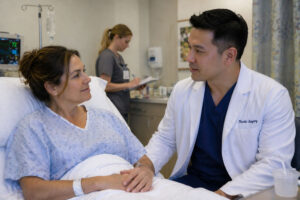
Your Hospital Stay: First 24–72 Hours at Kent Hospital
Typical stay: 2 days for specialized flap monitoring.
What to expect:
- Microsurgical flap checks: Nursing teams assess color, temperature, capillary refill, and Doppler signals frequently to ensure healthy blood flow.
- ERAS pain control: Multimodal regimens (regional blocks + non-opioid meds) reduce nausea, speed mobility, and minimize opioids.
- Early ambulation: Short, assisted walks begin within 24 hours to reduce clot risk and improve lung function.
- Nutrition & hydration: Light meals with a protein focus to support healing.
- Incisions & drains: Chest and abdomen are dressed; 3–4 drains are common initially.
If you’re converting from implants to DIEP: We remove the implant and capsule when indicated, then shape your new breast with your own tissue. Many patients describe immediate relief from tightness compared with living with an implant shell.
Week-by-Week Recovery Timeline
Week 1: Home Setup & Gentle Routine
- Energy: Expect fatigue; alternate short walks with rest.
- Drains: Empty 2–3×/day and record output; drains are removed in clinic once outputs are low and steady.
- Compression & support: Wear your abdominal binder and a soft front-closure bra as directed.
- Sleeping position: Upper body elevated, knees slightly bent to reduce abdominal tension.
- Medication: Continue the ERAS regimen and stool softeners; stay hydrated.
Weeks 2–3: Mobility Returns
- Walking: Increase steps daily; avoid lifting >5–10 lbs.
- Driving: Often okay once off prescription pain meds and you can react quickly (typically late week 2–3).
- Incision care: Keep sites clean and dry; contact us for redness, warmth, or unusual drainage.
Weeks 4–6: Back to Routine
- Work: Many return to desk jobs by weeks 3–4; physical jobs may require 6–8 weeks.
- Exercise: No core work or heavy lifting until cleared.
- Scar care: Start silicone gel/sheets, SPF 30+, and gentle massage once incisions are fully sealed.
Months 3–6: Refinement & Optional Touch-Ups
- Finalizing shape: Swelling resolves; breast and abdominal contours refine.
- Optional procedures: Symmetry adjustments, fat grafting, nipple reconstruction, and 3D areola tattooing can be scheduled if desired.
Pain Control: Why ERAS Feels Different
- Targeted nerve blocks + scheduled non-opioids smooth early discomfort.
- Early walking & breathing exercises reduce complications and speed recovery.
- Many patients transition to over-the-counter pain relievers by 7–10 days.
Patients usually describe DIEP discomfort as tightness or soreness more than sharp pain.
Drains, Binders, and Bras: Exactly What to Expect
- Drains (3–4): Empty and log twice daily; we remove them when outputs hit targets.
- Abdominal binder: Wear 24/7 for 4–6 weeks (off for showers) to minimize swelling and support the donor site. Only used sometimes.
- Bra: Soft, front-closure support; avoid underwire until cleared.
Scars & Scar Care (Breast + Abdomen)
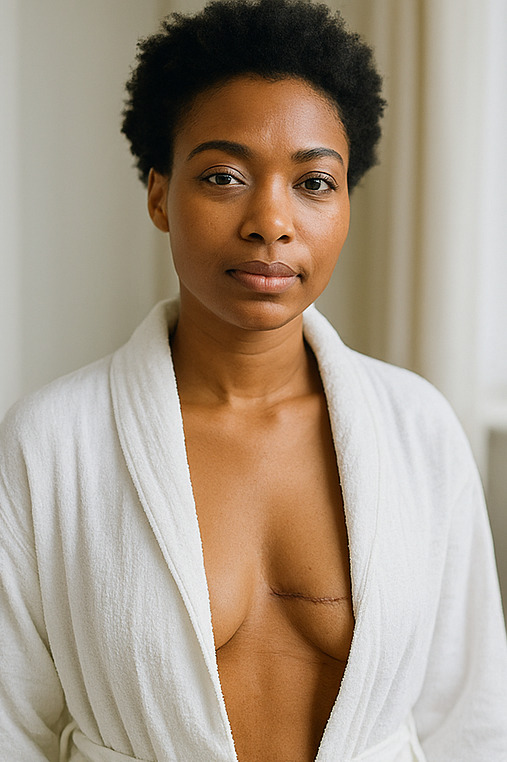
You’ll have a low horizontal abdominal scar (concealed by underwear or swimwear) and breast scars based on your reconstructive pattern. With silicone therapy, sun protection, and gentle massage, most scars soften and fade over 6–18 months.
After radiation? Autologous tissue (DIEP) typically behaves better than implants in radiated fields—less tightness and fewer long-term issues like capsular contracture.
The “Tummy Tuck” Benefit: What Patients Should Know
People often search: “Do you get a tummy tuck with DIEP flap?”
While the goal is reconstruction, the donor site usually provides a tummy-tuck–like effect:
- Flatter, smoother lower abdomen
- Improved waist contour
- Muscle-sparing (unlike older TRAM flaps) to preserve core function
Converting from Implants: Recovery Differences You May Notice
If you’re switching because of capsular contracture, post-radiation tightness/deformity, suspected rupture/leak, or recalled textured implants, recovery often feels more natural:
- No implant shell → less chest tightness
- No future exchanges every 10–15 years
- Warm, soft tissue that adapts with weight and ages naturally
Remember—insurance covers implant-to-DIEP conversions even when you choose to switch proactively.
When to Call The DIEP Group
Reach out promptly for:
- Fever >101.5°F, chills
- Worsening redness, warmth, or drainage at incisions
- Sudden color/temperature change or swelling of the flap
- Calf pain, chest pain, shortness of breath
You’ll leave Kent Hospital with detailed instructions and 24/7 on-call information.
Patient Testimonial — Rhode Island
“After radiation, my implants felt tight and uncomfortable. Switching to a DIEP flap at Kent Hospital was the best decision. Recovery was manageable with the ERAS plan, my breasts are soft and warm, and my abdomen is flatter.”
— C.S., Cranston, RI
Insurance Coverage: Immediate or Delayed — You’re Protected
Under the Women’s Health and Cancer Rights Act (WHCRA), insurance typically covers:
- Immediate or delayed DIEP flap reconstruction
- Opposite-breast symmetry procedures
- Revisions to improve contour or comfort
- Nipple reconstruction and 3D areola tattooing
This applies across Rhode Island and Southern Massachusetts. Our team manages benefit checks, preauthorization, documentation, and appeals—including elective implant-to-DIEP conversions.
Service Areas
Rhode Island: Providence, Warwick, Cranston, Pawtucket, Newport, East Providence, Woonsocket, Johnston, North Providence, Coventry, Cumberland, North Kingstown, South Kingstown
Southern Massachusetts: Fall River, New Bedford, Cape Cod (Falmouth, Hyannis, Barnstable, Mashpee), Attleboro, Somerset, Dartmouth
FAQs — Real Questions RI & Southern MA Patients Ask
How long is the hospital stay after DIEP flap in Warwick?
Usually 2 days with specialized microsurgical monitoring.
When can I pick up kids or lift heavy items?
Plan for 6–8 weeks before heavy lifting; resume light lifting (≤10 lbs) after clearance.
When can I sleep flat again?
Most patients transition from reclined to flat around 2–3 weeks, based on comfort.
Do DIEP flaps feel warm and natural?
Yes—because it’s your living tissue, not a device.
Will my DIEP breast change with weight?
Typically yes—it increases/decreases with your body, maintaining natural proportion.
Do I need implant problems to switch to DIEP?
No. You can switch anytime, even electively, and insurance still covers it.
Is DIEP the same as a tummy tuck?
Not exactly, but the donor site often heals with a flatter, tummy-tuck–like contour.
Internal Links
- DIEP Flap Breast Reconstruction in Providence/Warwick, RI — Complete Guide
- DIEP Flap Recovery in Rhode Island — What to Expect at Kent Hospital
- Insurance Coverage for DIEP Flap in Rhode Island & Southern Massachusetts
Ready to Plan a Smooth Recovery with The DIEP Group?
If you’re considering immediate or delayed DIEP—or you’re ready to switch from implants—we’ll guide every step of your recovery at Kent Hospital.
The DIEP Group
203-200-0828
thediepgroup.com
Kent Hospital, Warwick, RI